Your garage door is one of the most vulnerable parts of your home during a hurricane. If it fails, wind can rush inside, causing immense pressure that might lift your roof right off your house or collapse the walls.
How Wind Ratings Work
You can wind-rate your door up to a certain number of miles per hour. A lot of it’s based on PSF, pound per square foot, which is very common to engineers but not many people know what that means, so it gets transferred into miles per hour.
In Southeast Louisiana, a zone five rating means a 130 miles per hour wind-rating. Basically, what that’s going to have is your 3-inch 17-gauge U-bars on the back of the door. Sometimes there are smaller struts, but that doesn’t necessarily mean it’s wind-rated. On a 16-wide door, you should have about 6 or 7 struts.
Retrofitting an Existing Door

Best Garage Doors For Windy Areas of NJ
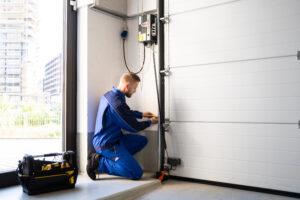
If a door is already installed and it’s not wind rated, is there a way to modify or retrofit that door to help with incoming winds or hurricanes? You can definitely retrofit and wind-rate your door. However, by the time you’re done adding up all the little pieces, because there are also little things other than the struts, like sometimes thicker gauge steel for the hardware, and a lot of times the tracks are heavier reinforced.
By the time you’re done replacing all that with the labor, you’re almost better off probably just going with a new wind-rated door. That way it’s certified and you’re all set, you have nothing to worry about.
What a Class 5 Hurricane Door Looks Like
A small garage door that’s a Class 5 hurricane door will sustain winds up to 200 mph, with the certification on the side of the door. Even with a tiny door, there’s a 2 inch deep rail holding that thing out, with long pins that go into extra sturdy tracks that allow a lot of wind to be able to play back and forth. Because it’s such a small door, this one only needs a single spring on it.
A large door, 19 by 7, has big springs, since when you do one of these things, you want to do the whole deal, all new hardware, heavy-duty brackets, extra long rollers, and a lot of support since it’s a very heavy door.
Insulation and Sound During a Storm
Because these are double-panel insulated doors, they hold the temperature in the garage very steady. If it’s 95 outside at night, it’s going to be 95 in the garage, but with an insulated door it can stay in the low 70s.
During the last hurricane, you could hear the wind buffeting up and back and forth in those doors, but they weren’t moving. These features meet or exceed building codes in hurricane prone areas, offering top-tier protection. It might cost you a little more, but it’s worth it.
Should You Lock the Garage Door Before a Hurricane
Should you lock the garage door when a hurricane comes? The answer is yes. Shut the garage door down, unplug it from the outlet, and lock the slide locks.
If you have a car in the garage, back up to the garage door and stop your car there, that will help stop the pressure of the door coming in and out. It may scratch the bumper of your car, so you probably want to put a blanket or something between it, but that will definitely help save your garage door.
How to Test and Secure the Door for a Hurricane
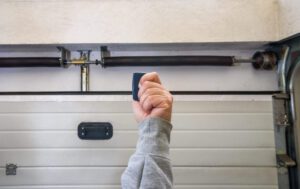
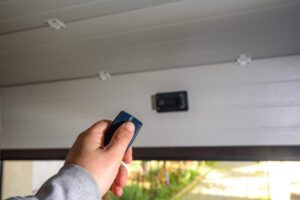
To test the door and make sure it’s working for a hurricane, push the button of the remote to close the door. Once the door is completely closed, go to the rail and pull it down with your hand, hold your hand down, take one step toward the back, and you’ll hear a clicking noise, meaning the door is locked manually.
Test it and make sure it opens and closes manually. Then go to the slide lock, which has a sticker saying to make sure you close it in the event of a hurricane, and slide it into the hole, then go to the other side and slide it as well.
Sometimes you might need to push the door down a little bit so it can go, because it’s manual, so it’s not pushing completely, you might have to push a little and slide down. If, by accident, somebody pushes the remote, it’s just going to walk, but it’s not going to open the door, which is now secure. Now the door is secure and completely hurricane ready.