If you live near the shore, you’ve seen what salt does. The grill rusts. The bike chain rusts. The screws on the deck railing go orange. Your garage door hardware is no different, except it’s also holding up a heavy door every time you open it. Salt lands on the springs, the cables, the rollers, the hinges. It keeps them damp. Rust shows up. You can’t keep the salt out of the air in Brick or Toms River, obviously, but you can stay a step ahead.
We’re APR Garage Doors, out of Brick. This is basically what we’d tell a neighbor who asked.
How does salt air damage garage door hardware?
Salt pulls moisture out of the air and holds it on the metal, so the steel never fully dries. Wet, salty steel is basically rust’s favorite thing.
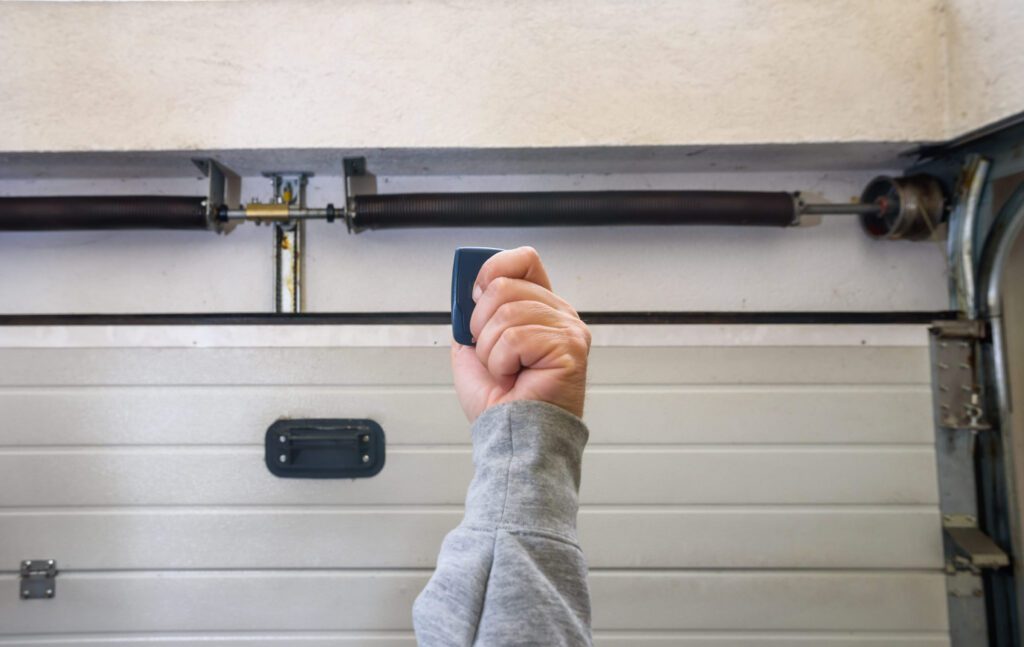
Garage Door hardware
The door panels usually come with a factory finish. The moving hardware behind them is a different story. It’s out in the open, it rubs and turns all day, and that salty film just sits there. Our maintenance guidance says it straight: salt-laden air and extra moisture in coastal New Jersey bring their own set of problems.
Now the part most people never hear about. Clopay, one of the manufacturers we install, lists “salt spray or exposure to coastal weather conditions” as an exclusion in at least two of its published warranties. One of those also says surface rust isn’t covered at all, and that leaving rust untreated can cost you coverage. Kind of a big deal if you’re a few blocks from the beach. Keeping up with maintenance protects the door, sure. It also protects the paperwork.
Which garage door parts rust first near the shore?
Usually the stuff that moves, the stuff under tension, and whatever’s down low by the floor. In practice, that’s springs, cables, rollers, hinges, the bottom brackets and the lower end of the tracks.
Start with the springs. Look for orange or brown on the coils, and listen. A squeal or a grind when the door moves is a hint. Then the cables. Rust spots are one thing; frayed strands poking out are another, and that one needs a call.
Rollers go next. You’ll feel it before you see it, because the door starts moving rough or jerky. Hinges squeak, and the rust shows up right at the pivot. Down by the floor, check the bottom brackets where the cables hook in, and the bottom of each track, since that’s where water and road salt pool.
Don’t skip the opener, either. Rusty sensor brackets can knock the safety sensors out of line, and then the door won’t close right.
Springs and cables are the ones that worry us. They carry the door’s weight under serious tension. Rust weakens them, and when one goes, it goes fast.
How do you prevent corrosion on garage door hardware?
Rinse it. Oil it. Keep an eye out for rust. Get it looked at now and then. Honestly, none of that is hard, it just has to actually get done, because the salt doesn’t take a week off.
A gentle rinse with fresh water gets the salt film off the door and the hardware you can reach. Clopay’s warranties treat cleaning as part of normal door upkeep anyway. Just keep the pressure washer away from the opener and the springs. You don’t need to blast anything.
Then oil. We recommend 3-in-1 oil on the hinges every 6 months or so, plus keeping the rollers and pulleys lubricated. A thin coat. Wipe off what drips. More oil doesn’t mean more protection, it mostly means more dirt sticking to it.
Spot a little rust on a hinge? Deal with it now. It’s a small job today and a bigger one later. And again, with some warranties, ignored rust can come back to bite you.
While you’re down there, look at the rubber seal along the bottom. If it’s cracked or flattened, rain and salt blow right in, straight onto the brackets and tracks.
Last thing. Keep your service invoices. Clopay’s commercial warranty requires proof of maintenance done by an authorized dealer at least once a year. Home warranties vary, but a folder of receipts never hurt anybody.
What should you leave to a garage door technician?
Springs, cables, and bottom brackets. Full stop. They’re under high tension, and we really don’t want homeowners adjusting springs on their own.
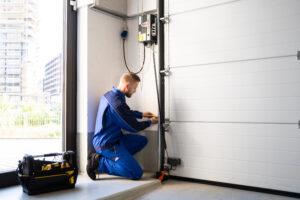
Rinsing the door and oiling hinges is fine to do yourself. Swapping a rusty spring, replacing cables, or re-tensioning the door is our job. When we come out, we look at the whole thing, from spring wear and cable condition to rollers, hinges, sensor alignment, weatherstripping and any corrosion we can spot.
How often? We generally recommend a service visit every 4 to 5 years, depending on how much the door gets used. A door that takes the ocean wind head-on and goes up and down all day might need one sooner. Hear a new noise, or one that won’t go away? Call. Don’t sit on it.
Frequently asked questions
Does salt air void my garage door warranty?
It can. At least two published Clopay warranties exclude salt spray and coastal weather, so pull out your own warranty and give it a read.
How often should I lubricate garage door hardware near the beach?
Hinges: every 6 months or so, 3-in-1 oil. Don’t forget the rollers and pulleys while you’re at it.
Can I replace a rusted garage door spring myself?
Please don’t. Too much tension. Call us.
How long does a garage door last?
Around 15 to 20 years for the door and the opener, typically. Salt and zero upkeep can cut the hardware’s life short, though.
Rust on the springs, or a new grinding sound? Give us a call at 732-860-4411. APR Garage Doors has been owner-operated since 2016, and we pick up 7 a.m. to 10 p.m. every day. You can also start with our Garage Door Maintenance or Garage Door Repair pages, or read Garage Door Spring Replacement: When NJ Homeowners Need Service, Wind-Rated Garage Doors in Coastal New Jersey and Most Common Garage Door Problems & How to Fix Them. Or just contact us.